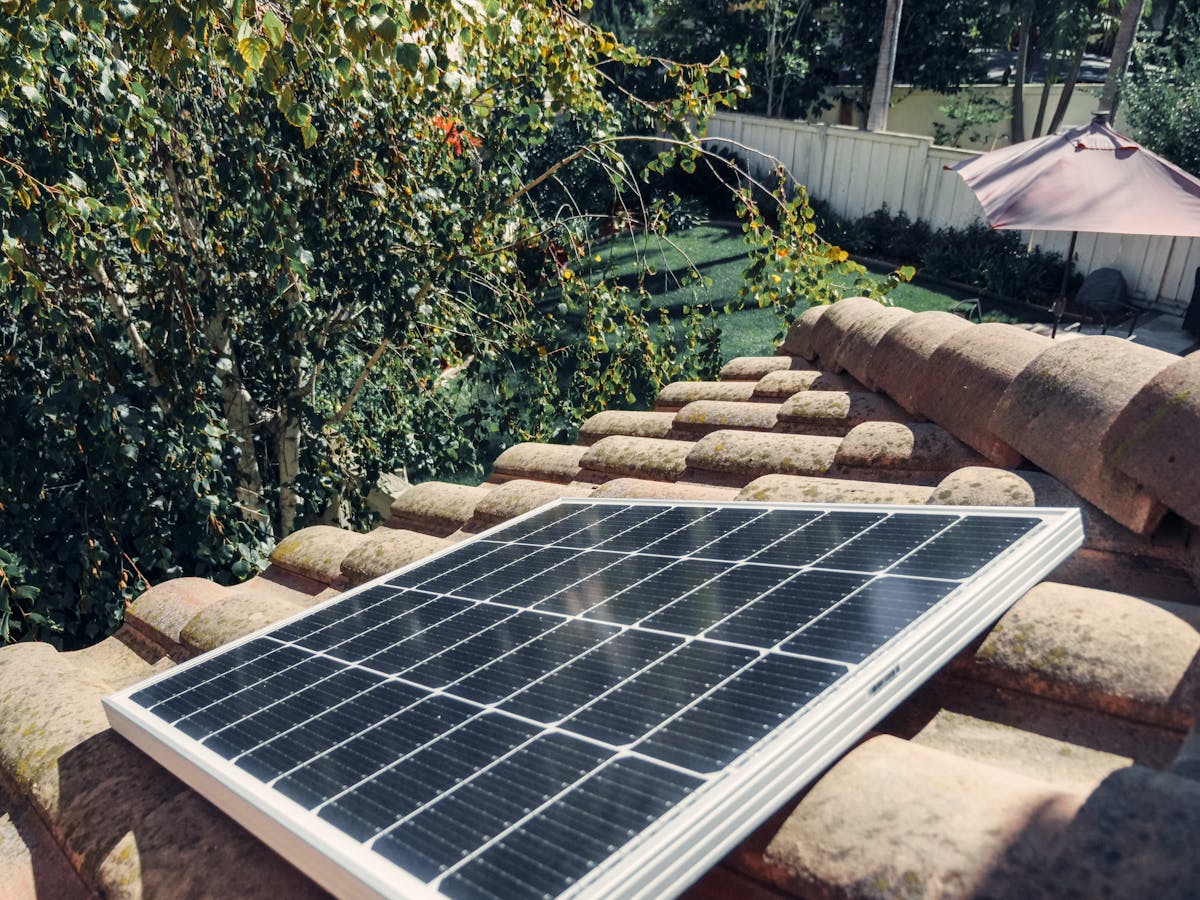
Best Solar Generators for Home Backup Power
When floodwaters rise and the grid goes down, a solar generator is one of the few backup power solutions that keeps working without fuel, without fumes, and without trips to a gas station that may itself be closed or underwater. The market has matured rapidly — today's solar power stations can run a refrigerator for 12+ hours, charge via solar panels, and power medical equipment safely indoors. Here is what you need to know to choose the right one for flood and outage preparedness.
Why Solar Generators Make Sense for Flood Preparedness
Gas generators are the traditional backup power solution, but they come with serious liabilities during a flood event. Fuel supplies are disrupted after major storms — gas stations lose power, run dry, and have long lines. Gasoline degrades in storage. And critically, gas generators produce carbon monoxide and can never run indoors or in a garage, which creates a dangerous dilemma when outdoor areas are flooded or unsafe.
Solar generators — more accurately called solar power stations or portable power stations with solar input — solve these problems:
- No fuel dependency: Solar panels work as long as there is daylight, including through cloud cover (at reduced output)
- No emissions: Can run indoors, in shelters, in evacuation centers, in vehicles
- Silent operation: No noise, no vibration, no exhaust
- Always ready: Keep them charged and they are immediately available with zero startup time
- Safe near flood conditions: No fire risk from fuel, and GFCI protection built into modern units
The tradeoff: solar generators cost more upfront and cannot run high-draw appliances like central air conditioning or electric water heaters. But for the critical loads during an outage — refrigerator, fans, phone charging, medical devices, lighting, internet router — a well-sized solar generator handles everything.
Key Specs to Understand Before Buying
Capacity (Watt-Hours)
Watt-hours (Wh) measure the total energy stored in the battery — how much total power you can draw before it is depleted. A 1,000 Wh battery can run a 100-watt device for 10 hours, or a 500-watt device for 2 hours. For home backup:
- Under 500 Wh: Phone charging, small fans, LED lighting only — not suitable for refrigerators
- 500–1,000 Wh: Can run a modern energy-efficient mini fridge or full-size refrigerator on a duty cycle (not continuously)
- 1,000–2,000 Wh: Refrigerator + phone charging + fan + CPAP — solid home backup for 1–2 days
- 2,000+ Wh: Extended backup; can handle a window AC unit on a duty cycle, power tools, medical equipment
AC Output (Watts)
This determines what you can plug in simultaneously. A 1,500-watt AC inverter can run a refrigerator (150W running, 400W surge), a CPAP (30–60W), phone chargers (20W each), and a fan (50W) all at once. Inverter ratings vary between continuous output and surge capacity — the surge capacity matters for starting motors in refrigerators and sump pumps.
Solar Input (Watts)
Higher solar input means faster recharge from panels. A 200W solar input with 200W of panels charges 1,000 Wh in about 5–7 hours of peak sun. A 800W solar input with compatible panels can top off a 2,000 Wh battery in 3–4 hours — vital when you need to recharge and use power on the same day.
Battery Chemistry: LiFePO4 vs NMC
This is the most important long-term decision factor:
- LiFePO4 (Lithium Iron Phosphate): 3,000–5,000+ charge cycles, better thermal stability (safer), slightly heavier, higher upfront cost. EcoFlow's newer models, all Bluetti units, and newer Jackery models use LFP.
- NMC (Nickel Manganese Cobalt): 500–800 charge cycles, lighter, less expensive. Older Jackery models use NMC.
If you use your power station regularly as part of a home backup system, LiFePO4 pays for itself many times over in longevity. At one cycle per week, NMC lasts about 10 years; LFP lasts 57+ years. For occasional-use emergency gear, NMC is acceptable.
Top Solar Generators for Home Backup in 2026
| Model | Capacity | AC Output | Max Solar Input | Battery Type | Price (approx.) |
|---|---|---|---|---|---|
| EcoFlow DELTA Pro | 3,600 Wh | 3,600W (7,200W surge) | 1,600W | LiFePO4 | ~$2,599 |
| EcoFlow DELTA 2 | 1,024 Wh | 1,800W (2,700W surge) | 500W | LiFePO4 | ~$999 |
| Bluetti AC300 + B300 | 3,072 Wh (expandable) | 3,000W (6,000W surge) | 2,400W | LiFePO4 | ~$3,599 |
| Jackery Explorer 2000 Pro | 2,160 Wh | 2,200W (4,400W surge) | 1,400W | NMC | ~$1,999 |
| Goal Zero Yeti 1500X | 1,516 Wh | 2,000W (3,500W surge) | 600W | NMC | ~$2,000 |
EcoFlow DELTA Pro — Best Overall for Home Backup
The DELTA Pro is the benchmark for home solar backup. At 3,600 Wh base capacity (expandable to 25,000 Wh with extra battery modules), it can power a full household for 24+ hours during an outage. The 3,600W AC output handles power-hungry appliances most competitors cannot — including window AC units, electric kettles, and hair dryers. X-Stream charging refills it from 0–80% in under 65 minutes from a wall outlet, and up to 1,600W of solar input means a sunny day tops it off quickly. The smart app monitors usage in real time. For homeowners in flood-prone areas who want genuine whole-home backup capability, this is the top choice.
Search EcoFlow DELTA Pro on Amazon
EcoFlow DELTA 2 — Best Value for Most Homeowners
At roughly $999, the DELTA 2 offers the best combination of capability and price in the category. The 1,024 Wh LFP battery runs a standard refrigerator on a duty cycle for 12–20 hours while simultaneously charging phones, running fans, and powering a CPAP. The 500W solar input and LFP chemistry make it a serious long-term investment. It also expands with the DELTA 2 Max Extra Battery to 2,048 Wh if you later decide you need more capacity. For most single-family homeowners, this is the sweet spot.
Search EcoFlow DELTA 2 on Amazon
Bluetti AC300 + B300 — Best for Long-Term and Off-Grid Use
Bluetti's modular system is designed for homeowners who want a permanent, expandable backup power infrastructure. The AC300 base unit accepts up to four B300 battery modules (3,072 Wh each), scaling to 12,288 Wh — enough for multi-day whole-home power. The LFP batteries are rated for 3,500+ cycles, making this the longest-lasting solar generator system on the market. The 2,400W solar input is the highest available in this class. Bluetti also supports home integration via split-phase 240V output (with the optional fusion box), enabling connection to a transfer switch for seamless home circuit powering. Best for serious preppers and those in high-outage-frequency areas.
Search Bluetti AC300+B300 on Amazon
Jackery Explorer 2000 Pro — Best Portability at High Capacity
Jackery's 2000 Pro offers 2,160 Wh in a more portable form factor than the competition, with a telescoping handle and compact design. The NMC battery means fewer lifetime cycles than LFP alternatives, but the 2,200W AC output and 1,400W solar input make it highly capable for emergency use. If portability matters — for evacuation, camping during displacement, or moving between locations — the Jackery 2000 Pro is a strong choice. Note the NMC chemistry: at one cycle per week, expect 10–15 years of reliable service.
Search Jackery Explorer 2000 Pro on Amazon
Solar Panels: What You Need to Pair with Your Generator
A solar generator without panels relies entirely on pre-stored energy or wall charging. For true emergency independence, pair your unit with foldable solar panels. Most manufacturers sell brand-matched panels:
- EcoFlow 400W Rigid Solar Panel: For fixed installations — best efficiency per dollar
- EcoFlow 220W Bifacial Portable Panel: Captures reflected ground light, 25% more output in ideal conditions
- Jackery SolarSaga 200W: Excellent portability, built-in carry handle
- Bluetti PV350 350W Panel: High wattage foldable design for the Bluetti ecosystem
For a 2,000 Wh battery in a typical outage scenario, two 200W panels (400W total) will fully recharge in 6–8 hours of good sun. In a multi-day outage, this lets you draw power through the night and recharge through the day sustainably.
What Can a Solar Generator Actually Power?
Realistic load planning prevents disappointment:
- Full-size refrigerator: 100–400W running (150W average on duty cycle) — a 1,000 Wh battery runs it 6–10 hours continuously
- Window AC unit (5,000 BTU): 450–600W — high drain; needs 2,000+ Wh to run overnight
- CPAP machine: 30–60W — a 500 Wh battery runs it all night
- Sump pump (1/2 hp): 400–800W running, 1,500W+ surge — verify your inverter's surge capacity before relying on this
- Smartphone charging: 10–20W — negligible drain
- LED lighting (10 bulbs): 80–100W
- Internet router + modem: 20–50W
Integration with Home Electrical Systems
For seamless backup, consider a transfer switch installation by a licensed electrician. A transfer switch allows you to connect your solar generator to selected home circuits, automatically (or manually) switching them off-grid during an outage. Cost: $500–2,500 depending on type (manual vs. automatic, partial vs. whole-home). This eliminates the need for extension cords running through the house and dramatically improves usability during extended outages.
For flood preparedness specifically, the ability to keep a sump pump running during and after a flood event can mean the difference between a damp basement and catastrophic water damage. A solar generator paired with a transfer switch that includes the sump pump circuit is one of the most effective flood mitigation investments possible.
Maintenance and Storage Tips
- Store LFP batteries at 50–80% charge for long-term storage; NMC at 40–60%
- Charge and discharge fully every 3 months to maintain calibration
- Store in a climate-controlled space — extreme cold reduces capacity temporarily; extreme heat degrades batteries permanently
- Test with real loads annually — run your refrigerator off it for a day to verify performance
- Check firmware updates from the manufacturer app; EcoFlow and Bluetti push regular efficiency updates
Bottom Line
The EcoFlow DELTA 2 at ~$999 is the best starting point for most homeowners — LFP batteries, 1,800W output, and enough capacity to cover critical loads for 12–24 hours. Step up to the DELTA Pro if you need to power larger appliances or want multi-day coverage. Choose Bluetti if you want a modular, long-term whole-home infrastructure investment. Jackery if portability is a priority.
Read our detailed brand comparison of Jackery, EcoFlow, and Bluetti for a side-by-side breakdown of charging speed, battery cycles, app quality, and warranty terms. If you plan to run a generator during a flood event, review our guide to safely operating generators during floods first. And for the full picture of emergency preparedness, start with the Flood Emergency Kit Checklist.