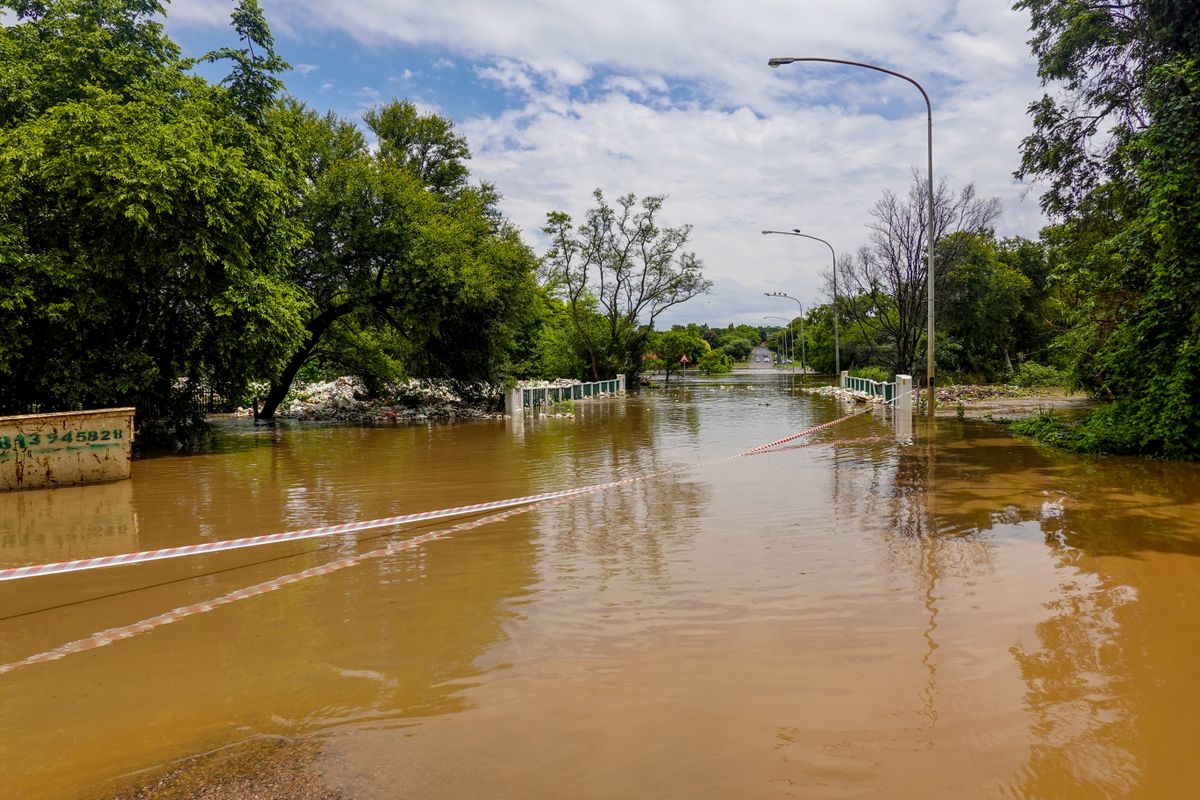
Flash Flood Safety: How to Protect Your Family in Minutes
Flash floods are the deadliest weather event in the United States, killing more people than tornadoes, hurricanes, or lightning — approximately 100 Americans every year. They develop in minutes to hours, often in clear weather miles away, with almost no warning. The families who survive are the ones who understood the threat before it arrived.
This guide covers what flash floods are, how to recognize them early, and exactly what to do when you have only minutes to act.
What Makes Flash Floods Different
A standard flood develops over hours or days as river levels rise. A flash flood can go from no water to 20 feet of raging current in under an hour. The term "flash" is literal — they flash into existence faster than emergency systems can respond.
Flash floods occur when:
- Heavy rainfall overwhelms drainage: 2+ inches per hour in a watershed causes runoff faster than soil and infrastructure can absorb
- Dam or levee failure: Sudden structural failure releases enormous water volume with no warning
- Ice jam breakup: Winter and spring jams on rivers can release catastrophic flow when they break
- Wildfire burn scars: Burned terrain loses its ability to absorb rain — post-fire areas flood at rainfall rates that would be harmless on unburned land
- Urbanization: Impervious surfaces (roads, parking lots, roofs) funnel water into drainage channels that rapidly overwhelm
High-Risk Geography
Flash floods are most dangerous in specific terrain types:
| Terrain Type | Flash Flood Risk | Why It's Dangerous |
|---|---|---|
| Canyons and slot canyons | Extreme | Water funnels from wide watershed into narrow channel; no escape routes |
| Dry creek beds and washes | Very High | Water arrives with no visual warning; can be bone dry one moment, raging the next |
| Low-lying roads and underpasses | High | Topographic traps — water collects faster than drivers can react |
| Downstream from burned areas | High | Debris-laden flow with no advance warning |
| Urban streets and basements | Moderate–High | Overwhelmed storm drains cause rapid surface flooding |
If you live near any of these terrain types, understanding your specific risk profile matters. Use FloodReady's flood risk assessment tool to get a personalized score, and read our guide to FEMA flood zones.
The Warning Signs You Must Recognize
Flash floods often strike areas with blue skies while a rainstorm rages miles away upstream. Waiting to see water before acting is often too late. Learn to read the environment:
Environmental Indicators
- Rising, discolored water: Brown or debris-filled water in a normally clear stream rising by even a few inches is a serious warning. Leave immediately.
- Roaring sound upstream: A flash flood sounds like a freight train before you see it — a deep rumbling or roaring from upstream is your cue to get to high ground immediately.
- Crack and boom sounds: Boulders tumbling in a flood channel create sounds unlike anything else.
- Smell of fresh earth or mud: Disturbed soil upstream can carry its scent ahead of the water.
- Sudden debris in flow: Leaves, branches, or foam appearing suddenly indicates heavy runoff upstream.
Weather Indicators
- Heavy rainfall anywhere in the watershed (you may not be able to see it)
- Dark, towering cumulonimbus clouds over mountains or upstream terrain
- Rainfall that doesn't seem to drain — water accumulating faster than it disperses
- A Flash Flood Watch or Warning issued by the National Weather Service
Alert Systems
Sign up for these services before an event, not during:
- Wireless Emergency Alerts (WEA): Automatically sent to all cell phones in the affected area — ensure your phone's emergency alerts are enabled
- NOAA Weather Radio: Battery-powered weather radios receive alerts even when cell networks are overwhelmed
- Local emergency notification system: Most counties have opt-in text/email alert systems — sign up at your county emergency management website
The 5-Minute Survival Protocol
When you hear a Flash Flood Warning or observe warning signs, you have minutes. The following protocol is designed for maximum family safety with minimum hesitation:
If You're Outdoors
- Move to high ground immediately — away from the water source, perpendicular to flow direction, as quickly as possible
- Do not enter any water, regardless of depth — 6 inches of fast-moving water can sweep you off your feet
- If you're in a canyon, gorge, or narrow valley, get to the walls and climb — there may be no option to outrun the water horizontally
- Once on high ground, stay there until the threat has completely passed and water levels have stabilized
If You're in a Vehicle
This is where most flash flood fatalities occur. The rules are absolute:
- Never drive into flooded roadways. Two feet of water can float most cars. Moving water at that depth can carry a vehicle off a bridge.
- If your vehicle stalls in rising water, exit immediately and move to high ground. Abandon the vehicle — it is replaceable.
- If water is rising rapidly around your vehicle and you cannot exit the door, break the side window with a center punch, seat belt cutter, or headrest post and exit through the window.
- FEMA's rule: if the road is flooded, find an alternate route or turn around. Every year, people die on roads they've driven without incident — once water is on the road, the conditions have fundamentally changed.
If You're at Home
- Move everyone to the highest floor immediately
- Grab emergency kit, medications, and important documents (see our emergency kit checklist)
- Turn off utilities if you can do so without entering flooded areas
- Deploy any flood barriers you have at entry points (doors, basement windows) — see our barrier product guide
- Do not attempt to wade through floodwater inside your home to retrieve belongings
Protecting Children and Vulnerable Family Members
Flash floods create distinct challenges for families with children, elderly members, or individuals with disabilities. Prepare for these specifically:
With Children
- Practice the emergency plan as a family drill — children who have rehearsed the plan react faster and calmer
- Assign older children a buddy responsibility for younger siblings
- Ensure school-age children know their home address, parents' cell numbers, and the family meeting point
- Keep a child-specific emergency kit item: a small comfort toy or book in the emergency bag reduces panic during prolonged sheltering
With Elderly or Disabled Family Members
- Register with your local emergency management office's special needs registry — many counties prioritize evacuation assistance for registered individuals
- Identify two neighbors who can assist with evacuation if you're not home
- Ensure mobility aids (wheelchairs, walkers) are stored where they can be grabbed in under a minute
- Stock a 7-day supply of medications in the emergency kit — refill the kit when medications are refilled
Flash Flood Safety for Outdoor Activities
Hiking, camping, and recreation near water and in canyon terrain require specific awareness:
Before You Go
- Check the weather forecast not just at your destination, but for the entire watershed upstream
- Know the elevation and drainage basin of your activity area
- Tell someone your exact location, planned route, and expected return time
- Download offline maps — cell service is often unavailable in flash flood terrain
While Outdoors
- Never camp in a dry streambed or at the base of a canyon — these are deathtraps in a flash flood
- Camp on high ground well above the water line
- Watch the upstream sky, not just your local weather
- When in doubt, get to high ground first — you can always come back down
After the Flash Flood
Flash floods recede quickly but leave hazardous conditions:
- Avoid floodwater — it is contaminated with sewage, chemicals, and debris
- Roads and bridges may have been undermined — they can look intact and fail suddenly
- Remain on high ground until water has fully receded and local officials confirm safety
- For home re-entry and cleanup, follow the systematic protocol in our post-flood cleanup guide
Flash flood preparedness is a mindset, not a checklist you complete once. The homeowners who install early warning systems, know their watershed geography, and practice evacuation routes with their families are the ones who make it home. Start with our full flood emergency action plan and build your preparedness one step at a time.