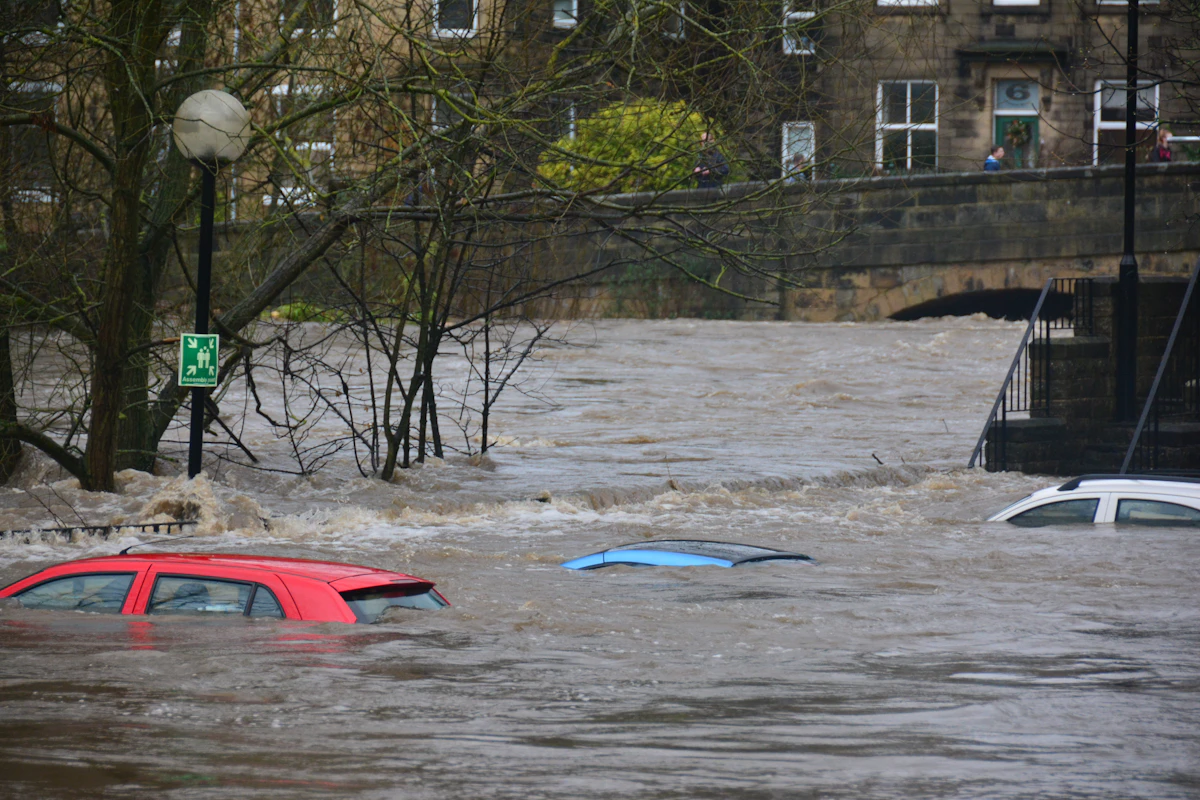
Flash Flood vs. River Flood vs. Coastal Flood: The Differences
Not all floods are the same. A flash flood destroys in minutes with almost no warning. A river flood rises slowly over days, giving you time to prepare. A coastal flood combines surge, waves, and salt water into the most structurally devastating flood type there is. Understanding which type threatens your property is the foundation of an effective flood protection strategy — because the defenses that work against one type may be useless against another.
Flash Floods: Speed Kills
A flash flood develops within 6 hours of a rainfall event — and often within 30 minutes to 2 hours. The National Weather Service defines the threshold at 6 hours, but the most dangerous flash floods can develop in minutes in canyons, steep terrain, and dry creek beds.
How They Form
Flash floods occur when rainfall exceeds the absorption capacity of soil and drainage infrastructure. Key triggers:
- Extreme rainfall intensity: 2+ inches per hour over a watershed
- Saturated soil: Heavy prior rainfall eliminates soil absorption capacity
- Impervious surfaces: Urban pavement, parking lots, and rooftops shed water immediately instead of absorbing it
- Wildfire burn scars: Hydrophobic soil on burned terrain sheds nearly all rainfall as runoff
- Dam or levee failure: Sudden structural failure releases huge water volumes instantaneously
Signature Characteristics
- Speed: water rises in minutes to hours, not days
- Velocity: fast-moving water (2–6 ft/sec or more) with tremendous destructive force
- Debris load: carries trees, vehicles, boulders — anything in its path
- Terrain-dependent: most dangerous in canyons, below mountains, in dry washes, and at the bottom of slopes
- Warning time: often minutes or none; can strike in clear weather if rain falls upstream
Who's at Risk
Flash floods kill more Americans than any other weather event — about 100 per year. They're especially deadly because they can strike anywhere it rains heavily, including areas with no prior flood history. The majority of deaths occur in vehicles driven through flooded roadways. Six inches of fast-moving water can knock an adult off their feet; twelve inches can carry a vehicle.
Protection Priorities
Against flash floods, advance warning and rapid evacuation matter more than structural defenses. NOAA Weather Radio, local emergency alert systems, and NWS Flash Flood Warnings are your primary tools. Maintain pre-positioned water barriers that can be deployed in minutes (see quick-deploy flood barriers — products like water-activated barriers and expandable flood gates deploy in 1–5 minutes). Keep a flood emergency kit ready. Know your evacuation routes.
River (Riverine) Floods: The Warning Window
River floods develop as rising waterways overflow their banks. Unlike flash floods, most riverine floods provide hours to days of warning — enough time for meaningful preparation and evacuation planning.
How They Form
River levels rise when:
- Sustained heavy rainfall increases runoff into the watershed
- Rapid snowmelt in upstream areas sends large water volumes downstream
- Ice jams break and release accumulated water
- Saturated soils from previous rain events reduce absorption of subsequent rainfall
Signature Characteristics
- Slow rise: levels increase over hours to days, giving preparation time
- Relatively slow water velocity in most flood plains
- Can persist for days to weeks before receding
- Affects properties in the flood plain — typically lower-lying areas near waterways
- Floodwater is murky and contaminated but less force-intensive than flash floods
Who's at Risk
Properties in FEMA flood zones A and AE along rivers and streams are the primary target. The Mississippi, Missouri, Ohio, Red, and Sacramento rivers have extensive flood plains with millions of at-risk properties. Seasonal patterns (spring snowmelt, hurricane-season rainfall) drive predictable high-risk windows.
Protection Priorities
Riverine flooding is the most "manageable" flood type because the warning window is longer. Key protections:
- Monitor NWS river forecast gauges for your local waterway
- Deploy sandbags or water-filled barriers around door thresholds and vulnerable entry points
- Move valuables to upper floors before water arrives
- Activate sump pumps and ensure backup batteries are charged
- Know your property's lowest floor elevation relative to flood stage
Permanent mitigation like flood barriers for door openings, backflow valves, and elevated utilities are highly effective against riverine flooding because the threat is predictable and the water is relatively slow-moving.
Coastal Floods: The Most Destructive Type
Coastal flooding combines multiple hazards: storm surge, wave action, wind-driven rain, and salt water corrosion. It's the deadliest and most destructive flood type — capable of destroying entire communities in a single event.
How They Form
Coastal floods occur when:
- Storm surge: Offshore winds push ocean water onshore, raising sea level by 5–30+ feet during major hurricanes
- High tides combined with surge: Astronomical high tides amplify surge height
- Nor'easters and extratropical cyclones: Less publicized than hurricanes but can generate substantial surge along the Atlantic coast
- Tsunamis: Rare but catastrophic; primarily a Pacific coast risk
- King tides + sea level rise: Increasingly causing tidal flooding without any storm
Signature Characteristics
- Wave action: adds horizontal force that inland flooding lacks — waves can collapse walls, move foundations, and overturn vehicles
- Salt water: corrodes steel, degrades concrete, kills vegetation, requires specialized remediation
- Debris velocity: ocean-driven debris acts as a battering ram at wave speeds
- Rapid onset: storm surge can arrive with only hours of warning
- Lateral extent: can penetrate miles inland from the coast depending on terrain
Who's at Risk
Properties in FEMA Zone V and VE face the highest coastal flood exposure. But Zone AE properties adjacent to the coast are not immune — storm surge penetrates well beyond the V zone boundary. The Gulf Coast (Florida, Louisiana, Texas), Atlantic seaboard (Carolinas through Maine), and Pacific coast (tsunami risk; moderate surge risk) all face distinct coastal flood profiles.
Protection Priorities
No portable barrier system is designed to withstand direct wave action. Coastal flood protection is fundamentally structural:
- Elevation above BFE + wave height is the primary defense — structures built to V zone standards must be elevated on open foundations
- Evacuation is the correct response to storm surge warnings — no home improvement can substitute for being out of the surge zone
- Coastal flood insurance (Zone VE policies) covers wave-action damage that inland flood policies may not
Side-by-Side Comparison
| Feature | Flash Flood | River Flood | Coastal Flood |
|---|---|---|---|
| Typical warning time | Minutes to hours | Hours to days | Hours to days |
| Water velocity | Very high | Low to moderate | Very high (waves) |
| Duration | Hours | Days to weeks | Hours to days |
| Primary defense | Evacuation + early warning | Barriers + preparation | Elevation + evacuation |
| FEMA zone | Any zone | Zone A, AE | Zone V, VE; coastal AE |
| Insurance needed | All zones | A/AE mandatory | V/VE mandatory |
For more on flash flood specifically, see flash flood safety: what you need to know. For building your full protection strategy, use our free flood risk assessment to identify your specific flood type risks and get tailored recommendations.