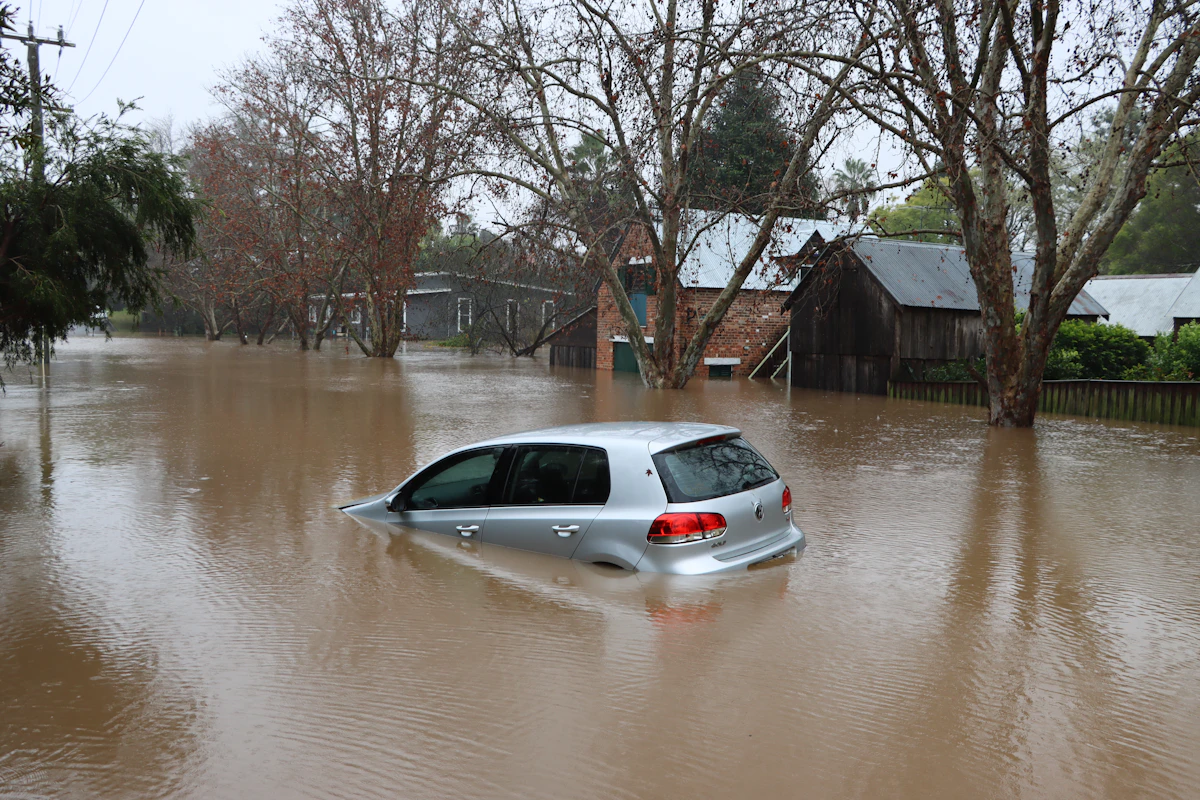
How to Prepare Your Car for Flood Conditions
Vehicles are involved in more than half of all flood fatalities in the United States. Yet most drivers have no preparation plan for flood conditions — no car emergency kit, no escape tool, no route for moving the vehicle to safety. This guide changes that with concrete, actionable steps you can complete this weekend.
Flood preparation for your car covers three distinct scenarios: preparing before flood season, acting when a flood watch is issued, and surviving if your vehicle is caught in rising water. Each scenario has different priorities and time windows. Understanding all three is essential.
Why Cars Are So Dangerous in Floods
Floodwater looks shallow from inside a dry vehicle. That perception is deadly. The physics of a car in moving water are brutal:
- Buoyancy kicks in fast: A typical sedan begins to float in just 12 inches of moving water. At 2 feet, the vehicle loses all traction and becomes unsteerable.
- Doors become impossible to open: Once water reaches door level (typically 3–4 feet), the exterior water pressure can exceed 600 lbs of force on a standard car door — impossible to push open from inside.
- Current multiplies the hazard: Fast-moving water at just 1 foot deep exerts enormous lateral force on a vehicle. A 2,000-pound car can be swept off a road at this depth in a strong current.
- Familiar roads change completely: Road edges, drop-offs, and bridge guardrails disappear under water. Drivers have driven into washed-out sections of roads they've used daily for years.
The National Weather Service states that more than 50% of flood deaths occur in vehicles. The majority of those victims drove around a "Road Closed" barrier into floodwater. Understanding the physics prevents that decision.
Before Flood Season: Vehicle Preparation
Annual preparation before flood season begins — or anytime you live in a flood-prone area — dramatically reduces risk and recovery cost.
Maintenance That Matters
These vehicle systems are critical in flood conditions:
- Brakes: Water in brake drums causes temporary brake failure — a hazard on any wet road. Ensure pads and rotors are in good condition before heavy rain season.
- Tires: Hydroplaning begins when tires can't displace water fast enough. Tires with tread depth below 4/32" are a serious risk in heavy rainfall. The penny test is insufficient — use a quarter.
- Battery: Flood-damaged electrical systems are among the most expensive repairs. Ensure your battery terminals are clean and corrosion-free. Consider terminal protectors if you live in a high-humidity region.
- Air intake height: Most standard passenger vehicles have air intakes 12–20 inches from the ground. If water reaches the air intake while the engine is running, hydraulic lock occurs — destroying the engine instantly. Know where your air intake is.
- Door and window seals: Cracked or brittle door seals allow water infiltration at depths that shouldn't reach the interior. Inspect annually and replace if cracked.
Know Your Parking Vulnerabilities
Where you park during a storm can mean the difference between a dry car and a total loss:
- Identify parking options on higher ground within a 10-minute drive of home, work, and frequently visited locations
- Note which parking areas are low-lying or in flood zones — these will flood first
- Underground parking garages can fill in minutes during flash floods — have an above-ground alternative
- Know your employer's or building's flood protocols for parking
Build a Car Flood Emergency Kit
A car emergency kit for flood conditions is distinct from a standard roadside kit. It should address two scenarios: being caught in flood conditions and waiting for rescue.
| Item | Purpose | Priority |
|---|---|---|
| Window breaker / seatbelt cutter combo | Vehicle escape tool — non-negotiable | Critical |
| Waterproof document holder | Protect insurance, registration, ID | Critical |
| Battery-powered weather radio | Alerts when cell networks are overwhelmed | High |
| Rope (50 ft) or tow strap | Rescue assistance; tie to fixed objects | High |
| Waterproof flashlight | Visibility after submersion or at night | High |
| Rubber boots (stored in trunk) | Wade through shallow floodwater if necessary | Moderate |
| Dry bag with phone and charger | Protect electronics, maintain communication | High |
| First aid kit | Injuries from debris in floodwater | Moderate |
The most important single item is a window breaker with integrated seatbelt cutter. Store it attached to the sun visor or clipped to the driver's seat — not in the glove box, which may be submerged and difficult to open under pressure. A quality rescue tool is available for under $15 on Amazon: view car escape tools.
For waterproofing your critical documents, a waterproof document pouch stored under the seat costs $10–20 and protects registration, insurance, and backup ID copies.
When a Flood Watch Is Issued: Moving Your Vehicle
A Flood Watch means flooding is possible within 12–48 hours. This is your window to move your vehicle — not during the storm, not after the water rises.
The 3-Step Car Safety Protocol
- Move to high ground immediately upon a Flood Watch for your area. Identify your destination before the watch is issued.
- Take valuables with you. Documents, electronics, and any irreplaceable items should come out of the vehicle before you park it on high ground.
- Take photos of your vehicle's pre-storm condition for insurance documentation. Include the exterior, interior, and odometer.
Do not wait for a Flood Warning — by then, roads to high-ground parking may already be flooded or congested. The Watch is your cue to act.
If You Can't Move Your Vehicle
If your vehicle is parked in a flood-prone area and you cannot move it in time:
- If possible, drive it uphill on your own property (high driveway, elevated lot)
- Keep it out of any low-lying area, garage pits, or drainage paths
- Document its position and condition for insurance
- Accept that it may sustain damage and prioritize your personal safety over the vehicle
If Your Car Is Caught in Floodwater
This is the highest-stakes scenario. Every second matters. Know these steps before they're needed.
Immediate Response
- Do not panic. Most vehicles have 60–90 seconds of floating time before significant sinking begins.
- Undo your seatbelt immediately. Use your seatbelt cutter if it jams due to tension from water pressure.
- Lower the window while electrical systems still function. Do this within the first 30 seconds. Power windows typically work for 30–60 seconds after water entry begins.
- If window won't open, use your window breaker to strike a side window at the corner — where the glass is weakest. The windshield is laminated and will not break easily.
- Exit through the window and swim or wade toward high ground, perpendicular to current flow.
If You Wait Too Long
If the vehicle has submerged before you exit, you must equalize pressure to open the door:
- Allow the interior to fill with water until pressure equalizes with the exterior
- Take a deep breath just before water reaches your face
- Push the door open when pressure is equalized — it will open
- Swim to the surface
This equalization technique is counterintuitive but effective. It's what emergency responders and military personnel train for. The instinct to fight rising water at the door is wrong — waiting for equalization is the correct response.
After Flood Damage: Insurance and Recovery
If your vehicle sustains flood damage, act quickly to protect your claim and minimize secondary damage:
- Do not attempt to start a flooded vehicle. A hydrolocked engine from water ingestion is a catastrophic failure. Even 2 inches of water in the cabin indicates significant damage.
- Call your insurance immediately. Flood damage to vehicles is covered under comprehensive coverage — not collision. If you only have liability coverage, flood damage is not covered.
- Document everything. Photographs, water line marks, damaged systems — all documentation strengthens your claim.
- Ventilate and dry the interior. Mold begins growing in wet carpet within 24–48 hours. Remove floor mats and any soaked materials immediately.
For comprehensive home flood preparation, read our Flood Emergency Action Plan and Emergency Kit Checklist. If you're evaluating flood barriers for your home's entry points, browse FloodReady's vetted product catalog.
Car preparation takes less than a day to complete fully. The window breaker mounted on your visor, the waterproof document pouch under your seat, and knowing your high-ground parking spot — those three things cost under $30 and could save your life. Do them this week.