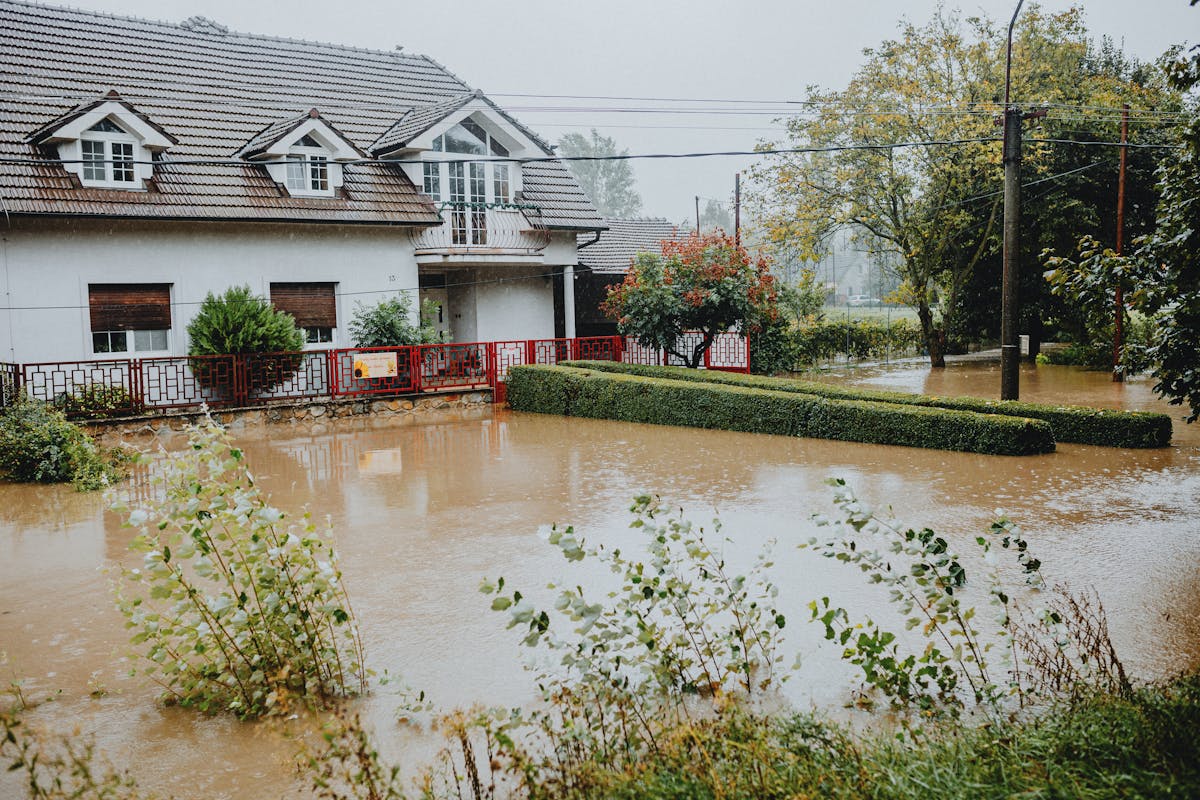
The True Cost of Flood Damage: Why Prevention Pays for Itself
One inch of water. That's all it takes to cause $27,000 in average damage to a 2,000 square foot home, according to FEMA. Yet most homeowners dramatically underestimate flood costs — until they're standing in wet carpet calculating losses that won't be covered by insurance. This guide puts real numbers on every category of flood damage, and shows you exactly how prevention measures pay for themselves.
The Full Picture: What Flood Damage Actually Costs
Most post-flood cost estimates focus on what's visible and immediate. The actual financial hit is typically 2–3 times what homeowners initially expect once all cost categories are accounted for.
Category 1: Structural Damage
Water damages every material it contacts. Below is a typical cost breakdown by building system for a 2,000 sq ft single-story home experiencing 12 inches of water on the first floor:
| Building System | Typical Cost Range | Notes |
|---|---|---|
| Drywall removal and replacement | $8,000 – $18,000 | Must be cut 2 feet above waterline; entire rooms typically replaced |
| Flooring (carpet, hardwood, tile) | $5,000 – $20,000 | Subfloor often requires replacement even if finish floor is salvageable |
| Insulation replacement | $2,000 – $6,000 | Saturated insulation loses all R-value and harbors mold |
| Cabinetry (kitchen/bath) | $5,000 – $30,000 | Particleboard cabinets typically cannot be salvaged |
| Electrical system inspection/repair | $2,500 – $15,000 | All wiring below waterline must be inspected; outlets, switches replaced |
| HVAC system | $3,000 – $12,000 | Ductwork, air handler, and units affected by flooding require full replacement |
| Water heater | $1,000 – $3,500 | Rarely survives flooding; gas units pose explosion risk if restarted |
| Foundation inspection/repair | $500 – $25,000+ | Hydrostatic pressure can crack block/poured foundations |
Structural subtotal for 12" of water: $27,000 – $129,000
Category 2: Contents and Personal Property
FEMA data shows that contents losses average 40–60% of structural repair costs in residential floods. Key items:
| Category | Average Replacement Cost |
|---|---|
| Major appliances (refrigerator, washer/dryer, dishwasher) | $3,000 – $8,000 |
| Electronics (TVs, computers, home office) | $2,000 – $10,000 |
| Furniture (living room, bedroom, dining room) | $5,000 – $25,000 |
| Clothing, shoes, accessories | $2,000 – $8,000 |
| Books, media, irreplaceable documents | Priceless to significant |
| Children's items, toys, equipment | $500 – $3,000 |
Contents subtotal: $12,500 – $54,000+
Category 3: The Hidden Costs
These costs are almost never in homeowners' initial estimates — yet they often equal or exceed the repair costs themselves:
- Temporary housing: Hotel, rental, or extended stay accommodations during repairs typically run $1,500–$4,000/month. Major repairs take 3–12 months. Total: $4,500 – $48,000. Note: NFIP does not cover this. Private flood insurance often does.
- Mold remediation: Mold develops within 24–48 hours in flooded spaces. Professional remediation: $3,000–$30,000+ depending on scope. Unmaintained mold can make a home uninhabitable and significantly reduce its value.
- Emergency services: Water extraction, dehumidification, and emergency boarding averages $2,000–$8,000 before repairs begin.
- Storage: Salvageable belongings need climate-controlled storage for 3–12 months. $150–$300/month = $450–$3,600 total.
- Contractor premiums: After declared disasters, contractor availability drops and prices surge 20–50% above normal rates. The homeowner who waits is the one paying full premium for a backlogged contractor 6 months later.
- Lost income: Time managing repairs, contractors, insurance claims, and FEMA applications averages 200–400 hours for major floods. Opportunity cost varies by income level.
- Insurance premium increases: Post-claim flood insurance premiums often increase 10–25%. Over 5 years, this adds $2,000–$8,000 in cumulative additional premiums.
- Property value impact: Homes with flood history sell at 3–8% discounts relative to comparable non-flooded properties. On a $400,000 home, that's $12,000–$32,000 in reduced asset value.
Flood Damage by Water Depth: FEMA's Cost Curves
FEMA's Hazus flood damage models estimate structural losses as a percentage of home replacement value based on water depth. The numbers are sobering:
| Water Depth | % of Structural Value Lost | Dollar Loss on $300K Home |
|---|---|---|
| 1 inch | 9% | $27,000 |
| 1 foot | 26% | $78,000 |
| 4 feet | 45% | $135,000 |
| 8 feet | 61% | $183,000 |
| 12 feet | 71% | $213,000 |
These figures do not include contents losses, temporary housing, or any of the hidden cost categories above. Total economic impact is typically 1.5–2.5x structural damage alone.
The Frequency Problem: Flooding is More Common Than You Think
Most homeowners mentally categorize flooding as a once-in-a-generation catastrophe. Statistics tell a different story:
- Homes in the 100-year floodplain (Zone AE) have a 26% chance of flooding over a 30-year mortgage — more than 6x the probability of fire
- 40% of NFIP claims come from properties outside designated high-risk flood zones
- The number of billion-dollar weather disasters has increased from an average of 3 per year in the 1980s to over 18 per year in the 2020s (NOAA data)
- Urban flooding from flash storms and overwhelmed stormwater systems is increasing in cities that have never been considered flood-prone
- Average time between significant floods at "repetitive loss" NFIP properties: 4.3 years
Use our flood risk assessment tool to see your property's historical flood events, current zone designation, and climate trajectory.
The ROI of Prevention: Real Numbers
FEMA's own research shows that every $1 invested in hazard mitigation saves $6 in future disaster costs (FEMA Mitigation Benefit-Cost Analysis Toolkit). For individual homeowners, real-world data supports even better returns:
Flood Barriers and Temporary Protection
- Inflatable or quick-deploy flood barriers ($800–$3,000): Prevent most water intrusion from up to 18" of exterior flooding. Against average flood loss of $27,000+, the payback period is immediate on the first prevented event.
- Sandbag pre-positioning ($50–$200 for a season): Effective for modest flooding but requires labor; not scalable for large areas. See our flood barriers vs sandbags comparison for detail.
Structural Modifications
- Sump pump with battery backup ($800–$2,500 installed): Prevents basement flooding from groundwater seepage during heavy rain events. Average prevented loss per event: $5,000–$20,000 in basement damage. Payback period: less than 1 event.
- Foundation waterproofing and drainage system ($3,000–$15,000): Prevents hydrostatic water intrusion. Eliminates the most common source of basement flooding in non-riverine areas.
- Flood vents installation ($500–$2,000): Required for crawl spaces in flood zones; reduces hydrostatic foundation pressure and lowers flood insurance premiums by $200–$800/year under Risk Rating 2.0.
- Elevating mechanical systems ($2,000–$8,000): Moving HVAC, electrical panels, water heaters above BFE prevents the $6,000–$30,000 in mechanical replacement costs that occur in almost every significant flood event.
Major Structural Mitigation
- Home elevation ($30,000–$150,000 depending on foundation type and height needed): Eliminates structural flood damage permanently. For homes in Zone AE with current NFIP premiums of $3,000–$8,000/year, elevation often pays for itself in insurance savings alone within 10–15 years — before factoring in prevented damage. FEMA HMGP grants cover 75% of elevation costs in many disaster declarations.
- Dry floodproofing ($5,000–$30,000): Sealing masonry buildings against water intrusion with waterproof membranes, flood shields on openings, and sump systems. Highly cost-effective for certain foundation types.
Our flood mitigation cost calculator runs the complete ROI analysis for your specific home — factoring in your flood zone, home value, current insurance premium, and available FEMA grants. Most homeowners are surprised by how quickly mitigation investments pay for themselves.
What Insurance Covers — and the Critical Gaps
Even well-insured homeowners face significant out-of-pocket costs after floods because of structural gaps in coverage:
- NFIP contents coverage pays Actual Cash Value — not replacement cost. A 5-year-old sofa worth $2,000 new might pay $600 after depreciation.
- NFIP does not cover additional living expenses — hotel bills, restaurant meals, storage, and rental costs come entirely from your pocket unless you have private flood insurance with ALE coverage.
- NFIP basement coverage is extremely limited — only structural elements and mechanical systems, not finished floors, walls, furniture, or belongings.
- FEMA Individual Assistance maximum: $43,900 — inadequate for significant structural damage in most markets.
- Insurance deductibles — NFIP deductibles range from $1,000 to $10,000+; higher deductibles mean lower premiums but significant out-of-pocket exposure on the first dollars of damage.
For a full comparison of coverage options, see Flood Insurance Explained: NFIP vs Private Insurance.
The Total Cost of a "Moderate" Flood: A Case Study
A 1,800 sq ft ranch home in Zone AE. Twelve inches of water on the first floor. Insurance coverage: NFIP building policy ($250K) with $5,000 deductible; no contents coverage; no private flood insurance.
| Cost Category | Total | Covered by NFIP | Out of Pocket |
|---|---|---|---|
| Structural repair | $85,000 | $80,000 (after $5K deductible) | $5,000 |
| Contents replacement | $28,000 | $0 (no contents policy) | $28,000 |
| Temporary housing (4 months) | $10,000 | $0 (NFIP doesn't cover) | $10,000 |
| Mold remediation | $8,500 | $0 (excluded) | $8,500 |
| Emergency water extraction | $3,500 | Partial ($1,500) | $2,000 |
| Contractor premium (disaster surge) | $12,000 | Partial (included in structural) | $0 (covered above) |
| TOTAL | $147,000 | $81,500 | $53,500 out of pocket |
This homeowner did everything right — they had NFIP coverage — but still faced $53,500 out of pocket because of coverage gaps. A private flood insurance policy with ALE and contents coverage would have reduced that to under $5,000. Or: a $2,500 sump pump, $3,000 in flood barriers, and elevated mechanicals might have prevented the event entirely at a 15:1 return on investment.
Taking Action Before the Next Flood
The math is unambiguous: flood damage costs far more than flood prevention. Every day spent unprotected is an accepted financial risk that compounds with each storm season.
Start with what you know: understand your flood risk score, review your insurance coverage against the gaps outlined here, and model the ROI of specific mitigation measures with our cost calculator.
For homeowners in high-risk zones, explore FEMA grant programs that can cover 75% of elevation and mitigation costs — the most effective protections become surprisingly affordable when federal funding is factored in. See our complete guide to FEMA Flood Assistance Programs.
And make sure your coverage matches your actual risk. See: Flood Insurance Explained: NFIP vs Private Insurance Comparison