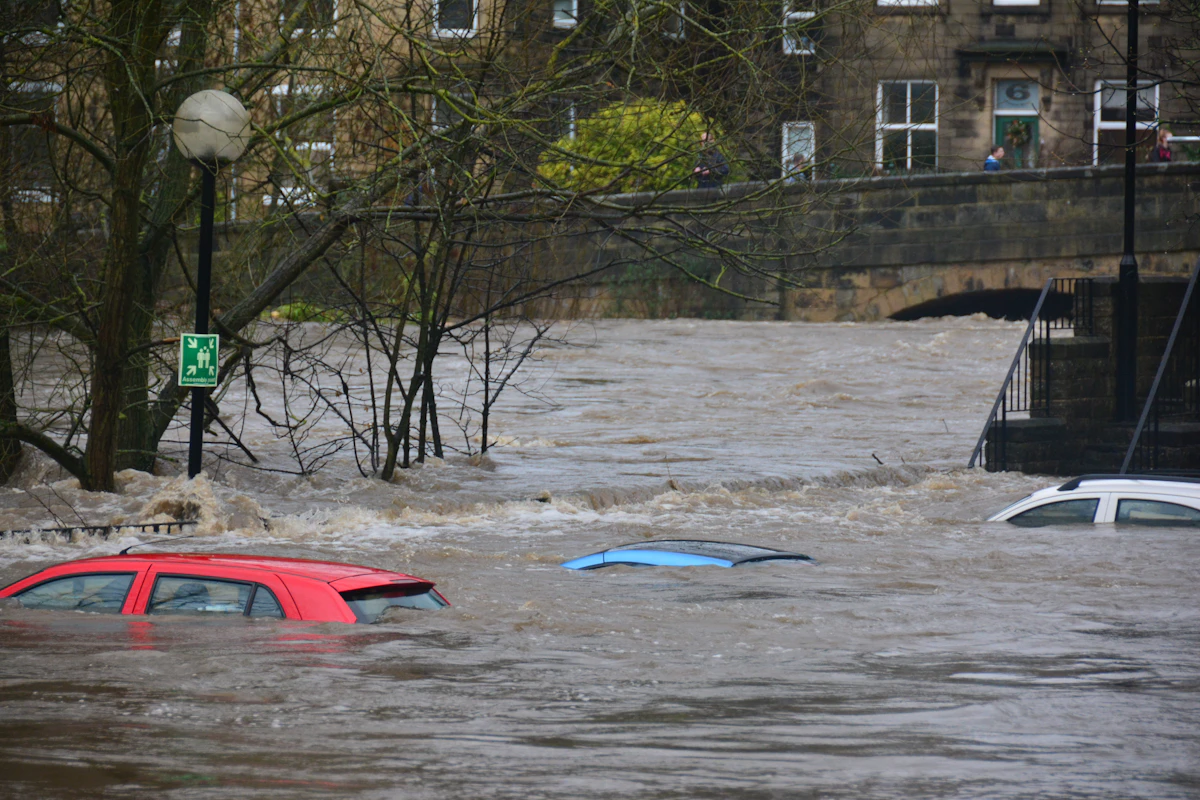
Types of Floods: Flash, River, Coastal & Urban Flooding Explained
Not all floods are the same — and the type of flood you face determines which protection strategies work, how much warning time you'll have, and how severe the damage is likely to be. Flash floods kill more people annually in the U.S. than any other weather-related hazard. Coastal surges can inundate homes with 15 feet of water. Groundwater flooding can destroy a basement without a single drop of rain falling on your roof. Understanding the five main types of floods is the first step toward protecting your home effectively.
According to NOAA, flooding is the most common and costly natural disaster in the United States. But "flooding" covers a wide range of phenomena with fundamentally different causes, timelines, and damage profiles. This guide breaks down each type, explains the warning signs, and identifies the protection measures that work — and which don't — for each.
1. Flash Floods
What It Is
A flash flood is a rapid, sudden rise in water levels — typically within 6 hours of a rain event or other triggering cause. Flash floods are most common in narrow valleys, dry stream beds, and areas downstream of intense storms, dam failures, or ice jam breaks. Water can travel at speeds of 2–6 feet per second, with enough force to roll boulders and collapse buildings.
Warning Time
Often less than 1–3 hours. Flash flood watches mean conditions are favorable; flash flood warnings mean a flash flood is occurring or imminent. In slot canyons and dry washes, a storm miles away can produce a wall of water with no local warning at all.
Geographic Risk
Flash floods occur nationwide but are most severe in the Southwest (Arizona, New Mexico, Colorado), Appalachian regions, and mountainous terrain where steep watersheds concentrate runoff rapidly. They are also a major risk in any urban area where concrete and pavement prevent infiltration, creating rapid runoff into storm systems.
Damage Profile
Flash floods cause the highest flood fatality rate because of the combination of speed, force, and lack of warning. Vehicles swept off roads account for approximately half of flash flood deaths. Structural damage is often catastrophic — foundation scour, complete inundation, and debris impact are all possible within minutes of arrival.
Protection Strategies
- Pre-positioned rapid deployment barriers — water-activated Quick Dam bags or self-filling tube barriers that can be deployed in minutes. There is often no time to sandbag during a flash flood.
- Elevation of critical utilities — electrical panels, HVAC, and water heaters must already be elevated; there is no time to move them during an event.
- Flood alert subscription — NOAA Weather Radio and wireless emergency alerts are the primary warning systems. Know your county's flood warning system.
- Never drive through water — 6 inches of moving water can knock a person down; 12 inches can carry a small vehicle.
See our Flash Flood Safety Guide for complete preparation and evacuation protocols.
2. Riverine (Fluvial) Floods
What It Is
Riverine floods, also called fluvial floods, occur when rivers and streams overflow their banks due to prolonged rainfall, snowmelt, or upstream dam releases. Unlike flash floods, riverine floods typically develop over days to weeks, giving communities significant preparation time. These are the floods that FEMA's flood zone maps primarily model — most Zone AE designations are based on riverine flood analysis.
Warning Time
Hours to days. River gauges upstream provide advance warning of crest timing and expected flood stage. The National Weather Service issues flood forecasts with crest height predictions days in advance for major river systems. This preparation window is what makes sandbag operations feasible for riverine floods.
Geographic Risk
The Mississippi River basin, Ohio River, Missouri River, and major tributaries throughout the Midwest are classic riverine flood zones. Spring snowmelt flooding in the upper Midwest and New England follows predictable seasonal patterns. Nearly any river system can produce flooding given sufficient sustained rainfall.
Damage Profile
Riverine floods tend to cause extensive water intrusion over large areas rather than sudden structural failure. The primary damage mechanisms are prolonged inundation (hours to weeks), contamination from sewage and agricultural runoff mixed into floodwaters, and mold growth from moisture retention. Buildings may remain structurally intact but require complete interior remediation.
Protection Strategies
- Sandbags and temporary barriers — riverine timelines allow for sandbag operations if labor is available. Sandbags require a plastic liner to be effective and must be stacked properly.
- Sump pump with battery backup — groundwater seepage intensifies during riverine events even before surface flooding arrives. A functioning sump pump is essential.
- Furniture and valuables elevation — move items to upper floors before the flood arrives. Refrigerators, washers, and dryers should be moved or elevated on concrete blocks.
- Flood insurance — the NFIP's 30-day waiting period means you cannot buy a policy when a river flood forecast is issued. Coverage must be in place well before the season.
3. Coastal Floods (Storm Surge)
What It Is
Coastal flooding is driven by storm surge — the abnormal rise in sea level caused by hurricane or severe storm winds pushing water onshore. Storm surge is distinct from regular tidal fluctuation and wave action. It can raise coastal water levels by 10–20 feet above normal tidal levels and penetrate miles inland. Hurricane Katrina produced a storm surge of 28 feet in some locations along the Mississippi Gulf Coast.
Warning Time
12–72 hours for tropical systems. Modern hurricane track forecasts provide several days of advance warning, but storm surge prediction improves significantly only within 24–48 hours of landfall. Nor'easters and extratropical cyclones can produce significant surge with less warning.
Geographic Risk
The Atlantic and Gulf coasts face the highest storm surge risk — particularly low-lying coastal plains in Florida, Louisiana, Texas, Mississippi, and the Carolinas. The Atlantic coast from Virginia to Maine faces nor'easter surge risk. Pacific coast surge events are less common but occur during major El Niño years and atmospheric river events.
Damage Profile
Storm surge combines hydrostatic pressure (weight of water), hydrodynamic force (velocity), wave action, and debris impact. Buildings in FEMA's Zone VE must be designed to withstand these combined forces. Even structures that survive surge may require complete interior rebuild due to salt water contamination of insulation, framing, and mechanical systems.
Protection Strategies
- Elevation — the most effective protection is physical elevation of the structure above the expected surge level. FEMA's Base Flood Elevation for coastal zones accounts for wave action in addition to surge height.
- Open foundation systems — Zone VE building codes require foundations that allow water to pass through (pilings, columns) rather than resist it. Walled enclosures below BFE must have flood openings or breakaway walls.
- Evacuation — for Category 3+ events, evacuation is often the only fully effective protection. No barrier or structure is guaranteed against direct major hurricane impact.
- Flood insurance — wind-driven surge is covered by NFIP flood policies (not wind policies). Verify your policy covers storm surge explicitly.
4. Urban (Pluvial) Floods
What It Is
Urban flooding — also called pluvial flooding or surface water flooding — occurs when rainfall intensity exceeds the capacity of storm drainage systems. This type of flooding is not caused by rivers overflowing or coastal surge, but by rainwater that can't drain fast enough. As cities expand with impervious surfaces (roads, parking lots, rooftops), runoff rates increase and storm sewer systems designed decades ago become chronically overwhelmed.
Warning Time
Minutes to hours. Urban flooding can develop in 15–30 minutes during intense convective storms. The flooding is often highly localized — one block may be dry while the next has 2 feet of street flooding.
Geographic Risk
Urban flooding affects cities across the entire country. Houston, Chicago, New York, Phoenix, and Denver have all experienced major urban flood events in recent years. It is not correlated with coastal location or proximity to rivers — any urban area with aging or undersized drainage infrastructure is vulnerable. Importantly, this risk is often invisible on FEMA flood maps, which model rivers and coastal surge but not urban drainage capacity.
Damage Profile
Urban floods primarily affect basements, ground-floor units, and below-grade parking structures. Damage is often caused by sewer backflow (sewage backing up through floor drains) as much as by surface water intrusion. The combination of water and sewage contamination makes clean-up costly and health-hazardous.
Protection Strategies
- Backflow prevention valves — installed on the main sewer line to prevent sewage backup into the basement. This is the highest-priority measure for urban flooding risk. Cost: $1,500–3,000 professionally installed.
- Sump pump system — handles groundwater and drainage that enters through the foundation during surface flooding events.
- Grading and swales — direct surface water away from the foundation. The ground should drop 6 inches over the first 10 feet from the foundation.
- Window well covers — basement windows are vulnerable to rapid street flooding. Polycarbonate covers prevent direct entry.
5. Groundwater Flooding
What It Is
Groundwater flooding occurs when the water table rises to the surface or above, causing water to emerge from the ground itself. This can happen after prolonged rainfall saturates the soil, after rapid snowmelt, or in low-lying areas near rivers where alluvial soils have high permeability. Groundwater flooding can occur even without any rain falling during the event — the source is subsurface water that has been building for days or weeks.
Warning Time
Hours to days, depending on the triggering event and soil conditions. Groundwater levels respond more slowly than surface water, giving more warning time than flash floods. However, the onset is gradual and the duration can be weeks or months.
Geographic Risk
Coastal plains, river floodplains, areas with shallow bedrock, and regions underlain by limestone karst formations are most susceptible. Parts of the United Kingdom have documented chronic groundwater flooding — a phenomenon increasingly recognized in the U.S. Great Plains and lower Mississippi Valley where shallow water tables interact with heavy rainfall seasons.
Damage Profile
Groundwater flooding affects basements and crawlspaces most severely. Foundations can crack under hydrostatic pressure from saturated soil. Moisture intrusion leads to mold, structural wood decay, and concrete spalling if chronic. Unlike surface flooding, groundwater flooding can persist for extended periods even after rainfall stops.
Protection Strategies
- Sump pump system with battery backup — the primary defense against groundwater infiltration. Size the pump to handle peak inflow rates.
- Interior or exterior drainage systems — French drains, drain tile systems, and interior perimeter drainage channels redirect groundwater away from the foundation before it enters the structure.
- Waterproofing membranes and sealants — exterior waterproofing of foundation walls creates a barrier against hydrostatic pressure. Interior sealants provide a secondary layer.
- Proper landscaping — rain gardens, gravel beds, and swales can increase soil infiltration capacity away from the structure, reducing local groundwater accumulation.
Which Type of Flood Are You Most At Risk For?
Most homeowners face a primary risk type based on geography — but secondary risks are common. A home in a riverine flood zone may also face urban drainage issues during extreme rain events. A coastal property faces both storm surge and potential flash flooding from hurricane rainfall. Understanding your layered risk profile is essential for effective preparation.
Use our free Flood Risk Assessment to identify which flood types are most relevant to your property. Then review your protection options using the Cost Calculator to build a mitigation plan matched to your specific risk profile.
For preparation guides specific to the most dangerous flood type, see our Flash Flood Safety Guide and our complete guide to Building Your Flood Emergency Action Plan. Browse flood protection products vetted for each flood type — from rapid-deployment barriers for flash flood zones to sump systems for groundwater-prone basements.