Best Portable Power Stations for Emergencies 2026
A portable power station is the single most useful piece of emergency equipment most households don't own yet. When floodwaters knock out the grid — sometimes for days — a quality power station keeps your refrigerator cycling, your phones charged, your sump pump running on battery backup, and your CPAP machine operating. We've evaluated the 2026 lineup from the major brands and ranked the best options for real flood and storm scenarios.
What Makes a Power Station Good for Emergencies?
Not all portable power stations are built for emergency use. Consumer-grade units optimized for camping often fail under the sustained loads a flood scenario demands. Here's what actually matters:
- Battery chemistry: LiFePO4 (lithium iron phosphate) outperforms NMC in emergency use — 3,000–5,000 charge cycles versus 500–800, better thermal stability, and no fire risk if the unit gets wet during a disaster
- AC output rating: The continuous wattage output determines what appliances you can run. A refrigerator needs 150–400W running and 600–1,200W surge to start. A sump pump needs 400–800W running
- Pass-through charging: Can the unit power your home loads while simultaneously charging from solar panels? This matters for multi-day outages
- Recharge speed: How fast does it refill from wall, car, or solar? Units with X-Stream or similar fast-charge technology go from 0–80% in under an hour
- App connectivity: Remote monitoring lets you track remaining capacity and manage loads without being physically present at the unit
Top Pick: EcoFlow DELTA 2 Max (2,048 Wh)
The EcoFlow DELTA 2 Max earns our top pick for emergency preparedness because it threads the needle between capacity, output power, and recharge speed better than any other unit at its price point.
- Capacity: 2,048 Wh (expandable to 6,144 Wh with add-on batteries)
- AC output: 2,400W continuous, 5,000W surge (X-Boost technology can run 99% of household appliances)
- Recharge: 0–80% in 50 minutes from wall; supports up to 1,000W solar input
- Battery chemistry: LiFePO4, rated for 3,000+ cycles
- Weight: 48 lbs — manageable with two handles
At 2,048 Wh, the DELTA 2 Max can run an energy-efficient refrigerator for 20–30 hours (accounting for compressor duty cycle), charge a phone 150+ times, or run a portable sump pump for 8–12 hours. The 2,400W continuous output handles virtually any critical home appliance except central HVAC. Check current pricing on Amazon.
Runner-Up: Jackery Explorer 2000 Pro
The Jackery Explorer 2000 Pro is the most field-proven unit in this capacity class, with a long track record of reliability in disaster scenarios across the Gulf Coast and Midwest flood zones.
- Capacity: 2,160 Wh
- AC output: 2,200W continuous, 4,400W surge
- Recharge: 0–80% in 2 hours from wall; 800W max solar input
- Battery chemistry: LiFePO4 (NMC in older Pro versions — verify before purchasing)
- Weight: 43 lbs
The Explorer 2000 Pro is slightly lighter than the EcoFlow and marginally higher capacity, but slower to recharge from the wall. For homeowners who prioritize capacity and portability over fast recharge, it's the better choice. View on Amazon.
Best Mid-Range: Bluetti AC200L (2,048 Wh)
Bluetti's AC200L is the most expandable unit in its class — you can stack two extra battery modules to reach 8,192 Wh, which covers a home for 3–4 days of essential loads. That level of expandability makes it the best choice for households in repeated flood-risk areas who need long-duration resilience.
- Capacity: 2,048 Wh (expandable to 8,192 Wh)
- AC output: 2,400W continuous with Power Lifting (handles high-watt appliances up to 3,000W)
- Recharge: 0–80% in 90 minutes; 1,200W solar input
- Battery chemistry: LiFePO4
- Weight: 62 lbs (heavier — plan for two people or use the built-in trolley wheels)
Shop Bluetti AC200L on Amazon.
Best Budget Option: EcoFlow DELTA 2 (1,024 Wh)
If the 2,000 Wh class is outside your budget, the EcoFlow DELTA 2 at 1,024 Wh covers the essential emergency loads — refrigerator for 10–15 hours, phone charging, a fan, and a CPAP machine — at roughly half the price of the top picks.
- Capacity: 1,024 Wh (expandable to 2,048 Wh with one add-on battery)
- AC output: 1,800W continuous, 2,500W surge
- Recharge: 0–80% in 50 minutes (same X-Stream as the Max)
- Battery chemistry: LiFePO4
- Weight: 27 lbs — easy to move by one person
The DELTA 2 can't run a full-size refrigerator as long and won't handle a sump pump plus refrigerator simultaneously, but for a one-person household or a family that has separate battery backup for their sump pump, it's excellent value. View EcoFlow DELTA 2 on Amazon.
Best Compact Option: Goal Zero Yeti 1000X
The Goal Zero Yeti 1000X is the choice when portability and ruggedness matter more than raw capacity. At 26 lbs with a military-grade build, it survives the handling that emergencies demand — stowed in a truck during a rushed evacuation, moved around in a shelter, left outside in rain.
- Capacity: 983 Wh
- AC output: 1,500W continuous, 3,000W surge
- Battery chemistry: NMC (rated for ~500 cycles)
- Weight: 26 lbs
- Best for: Evacuation scenarios, households needing a grab-and-go power option
The NMC chemistry means fewer lifetime cycles than the LFP options above — a tradeoff for the rugged, portable form factor. If you're stationary and protecting a home, the EcoFlow or Bluetti options are better. If you're frequently evacuating or need something vehicle-portable, the Yeti 1000X is the right call. Check Goal Zero Yeti 1000X pricing.
How Much Capacity Do You Actually Need?
The right capacity depends on what you need to run and for how long. Use this quick framework:
| Priority Load | Watt Draw (Running) | Hours on 2,000 Wh |
|---|---|---|
| Energy-efficient refrigerator | ~150W avg (duty cycle) | ~24 hours |
| Portable sump pump (1/3 HP) | ~400W | ~4 hours continuous |
| Box fan (large) | 75W | ~25 hours |
| CPAP machine (without humidifier) | 30–60W | 30–60 hours |
| LED lighting (10 bulbs) | ~100W | ~18 hours |
| Smartphone charging | ~20W | 100 full charges |
| Internet router | ~15W | ~130 hours |
A 2,000 Wh unit running just a refrigerator plus lighting plus phone charging will last 24–36 hours before needing a recharge. Add a solar panel input and you can extend that indefinitely as long as the sun is accessible.
Critical Accessory: Solar Panels
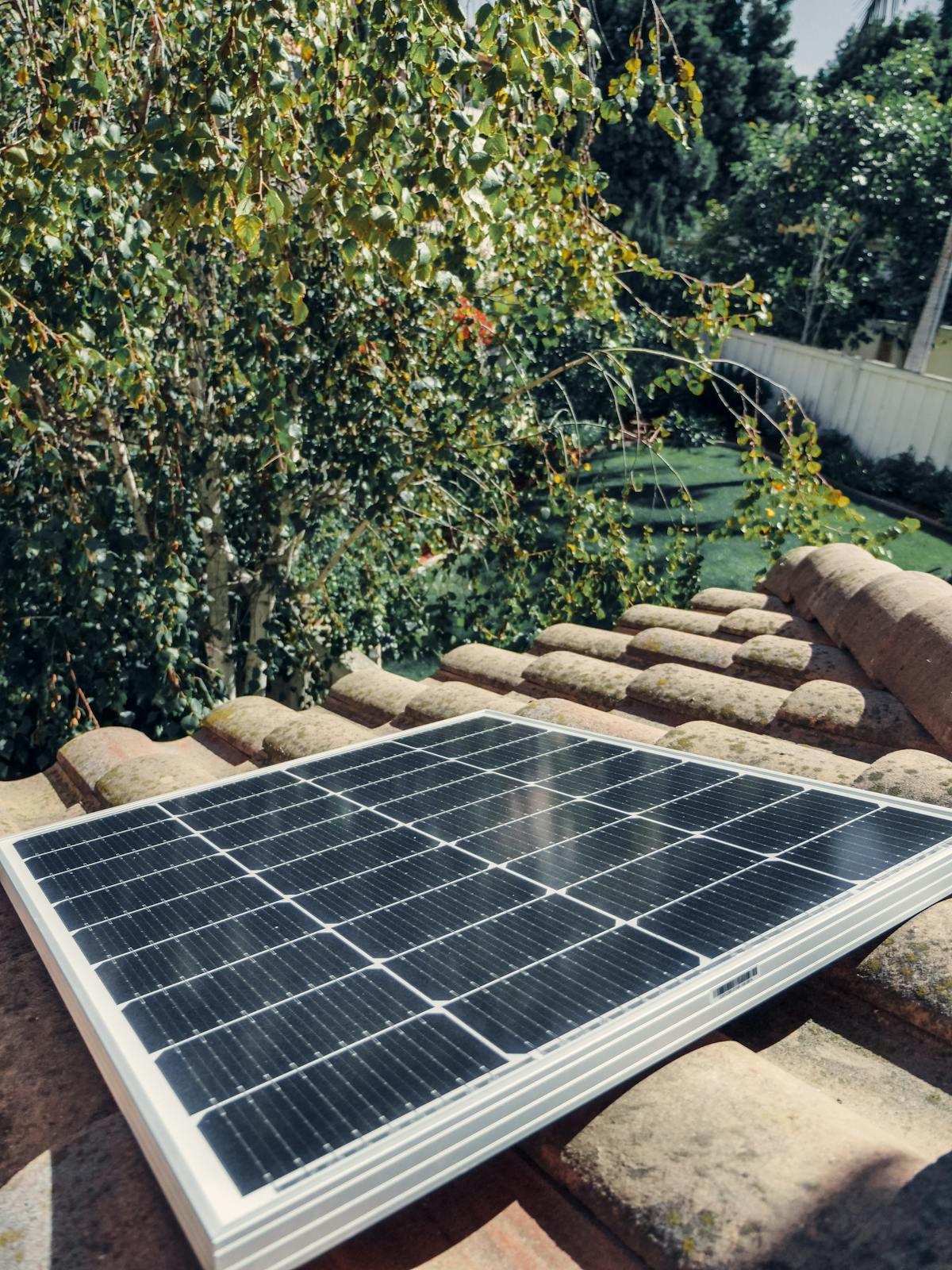
A portable power station without solar panels is a single-use emergency resource. With solar panels, it becomes a renewable infrastructure that works for days, weeks, or months. For a 2,000 Wh station:
- 200W solar panel kit: Tops off the battery in approximately 10–12 hours of peak sun — fine for overnight recharging
- 400W panel kit: Tops off in 5–6 hours — enough to use power during the day and fully recharge before evening
- 800W+ (EcoFlow or Bluetti expandable systems): Can run home loads and recharge simultaneously
Match the solar panels to your specific power station's max solar input wattage — exceeding it doesn't charge faster and can damage the charge controller.
What a Portable Power Station Cannot Do
Be clear on limitations before relying on a power station during a disaster:
- Central HVAC: A 3-ton central AC unit draws 3,500W+ — beyond any portable power station on the market. Window AC units (500–1,500W) are feasible on 2,000 Wh units
- Electric water heaters: 4,000–5,500W draw — not feasible
- Electric stove or oven: 2,000–5,000W — not feasible for sustained cooking
- Well pumps (high-wattage): 750W–3,750W+ — check your specific pump before assuming it will work
For deeper context on indoor-safe backup power versus traditional generators, see our Generator vs. Portable Power Station comparison. For solar-specific recommendations, read our Best Solar Generators for Home Backup guide.
Storage and Maintenance Tips
A power station you find dead when you need it is worthless. Maintain yours properly:
- Store at 50–80% charge for LFP batteries — full charge during long-term storage slightly degrades capacity
- Recharge every 3–6 months if stored — LFP self-discharge is slow but real
- Keep cool and dry: Store at room temperature, not in a garage that hits 120°F in summer
- Test under load quarterly: Run your refrigerator off it for 2 hours twice a year to verify the system works
Pair your portable power station with a complete flood emergency kit, a family evacuation plan, and a NOAA weather radio for early warning — and you have a fully functional emergency power system ready before the next flood season.